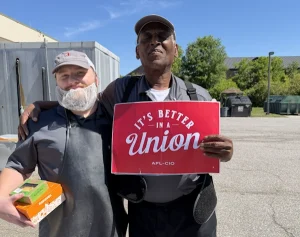

We fight for employee rights and better wages through collective bargaining.
We can help you, no matter your industry.
We are Stronger Together.
Benefits
Better wages, insurance
Protection
Contract rights enforced
Advocacy
Your voice represented
Our organizers are here to help.
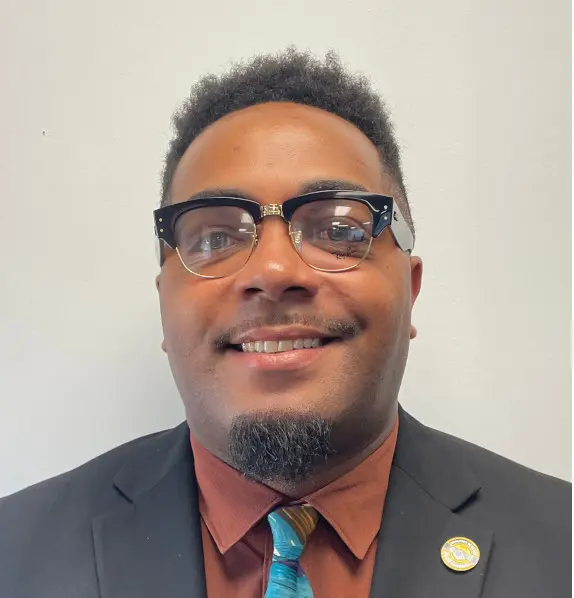
Jordan Easley
Organizing Coordinator

Luis Cadavid
Our Current Organizing Campaigns
A organizing campaign is the process by which employees come together to learn about union representation, discuss workplace concerns, build support among coworkers, and determine whether they want a union to represent them.




Frequently Asked Questions
A union is an organization that represents employees and deals with management on all issues concerning wages, benefits, and conditions of employment. This gives you, the employees, the power of MANY … not simply the power of ONE.
A union can negotiate with management over wages, benefits, hours, workplace safety, scheduling, paid time off, overtime policies, seniority rights, job security, and other working conditions. Through collective bargaining, employees have a voice in decisions that affect their jobs and their families.
Union workers typically earn higher wages and are more likely to receive employer-provided benefits such as health insurance, retirement plans, and paid time off than comparable non-union workers. Through collective bargaining, employees negotiate wages and benefits as a group, which often leads to better compensation packages and stronger workplace protections.
A contract between your employer and you, the employee, would spell out the terms of your employment, what is expected from you, and what you can expect from them. Right now, your employer is under NO obligation to you. Job descriptions, wages, benefits, etc. can change at any moment with or without notice. Check your handbook! With a union contract, these benefits would be guaranteed in writing! This legally binding agreement provides for a fairer workplace, and a more secure lifestyle for you and your family.
No! Section 7 of the National Labor Relations Act protects your rights to form, join, or assist in forming a union at your workplace. The law protects your rights and ensures that you will not be treated disparately for your union activity. You are allowed to discuss the union while you are on break or off the clock and the person or persons you are discussing the union with are on break or off the clock as well.
Employees typically begin by talking with their coworkers and learning more about union representation. If enough employees want to move forward, they can sign authorization cards and may petition the National Labor Relations Board (NLRB) for an election. If a majority of workers vote in favor of union representation, the union becomes the employees’ bargaining representative. The process is democratic and driven by the workers themselves.

CONNECT WITH AN I.C.W.U.C. ORGANIZER
Have questions about organizing, workplace issues, or union membership? Submit your contact information and an organizer will reach out to discuss how I.C.W.U.C. may be able to assist you.
All inquiries are handled confidentially.
Loading form…
Partner Organizations